
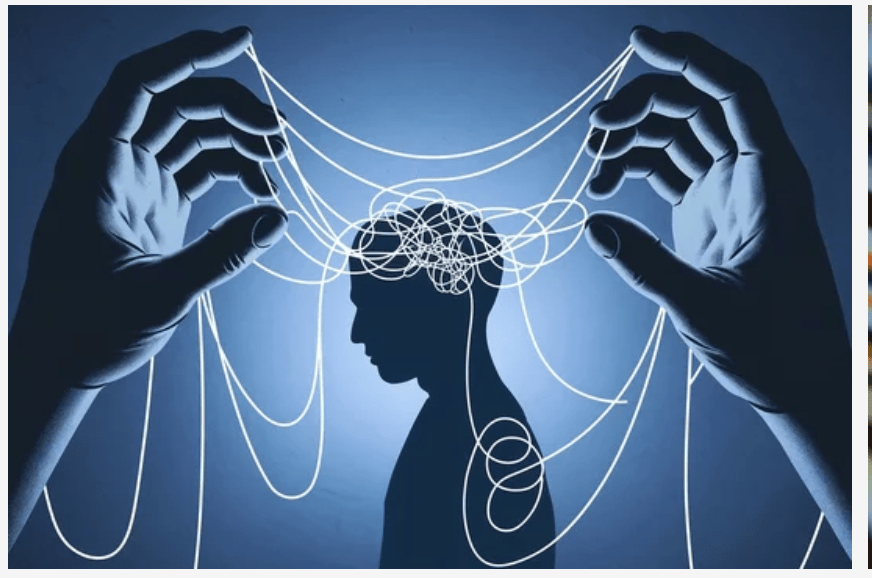
I recently heard a speaker say, “Healing is an inside job.” That really jumped out at me. It’s so true. We have to do introspection or inner work. We must face our shadows, demons, traumas or whatever. That typically involves our “self-limiting beliefs” or “limiting beliefs.” Such beliefs are thoughts or convictions considered to be absolute truths, thereby restricting our potential and preventing you from achieving your goals or taking risks. They’re usually caused by some not-so-great experience in our childhood that we adopt as a truth. Think of limiting beliefs as our mental make-up or inner monologue or state of mind or a negative thinking pattern or the story you tell yourself.
What are self-limiting beliefs?
Self-limiting beliefs are deeply ingrained assumptions shaped by the narratives spoken or mirrored by our primary caregivers. Like it or not, our parents, guardians, teachers and other influential figures unintentionally pass on their own insecurities, fears, or limited perspectives which we as children absorb as truth.
Take for example, a child labeled as “sensitive” or a “cry baby,” who may internalize these labels as defining traits. Over time, these labels can morph into fixed beliefs like, “Emotions are bad” or “I am not strong enough,” or “I’m weird.” This can lead to feelings of inadequacy and a belief that they should be able to handle situations the same way everyone else does. As a result, the child learns to suppress their feelings, eventually causing them physical harm. But what if the child feels the world more intensely than others? What if the child is a Highly Sensitive Child? Instead of a caregiver recognizing them as being highly sensitive, the caregiver’s focus shifts to perceived shortcomings. The sad thing is, these limiting beliefs stemming from these labels carry into adulthood.
Where do these limiting beliefs come from?
According to Bruce Lipton, the author of The Biology of Belief, we live in a subconscious state, a Theta state, from age 0-7 years and this is when all our beliefs from people close to us and our community are formed. His book is a fascinating read by the way. According to, Where Do Limiting Beliefs Come From? 6 Dangerous Origins, limiting beliefs stem from childhood experiences, messages from parents and caregivers, lack of support or encouragement, traumatic events, culture and society, family and community, social norms and stereotypes, and the education system. I encourage you to read the article as it explains how each of these origins form our beliefs.
How do these beliefs hold us back?
Limiting beliefs act as self-imposed walls, holding us back from reaching our full potential, and can involve:
- Sabotaging Success: When convinced that failure is inevitable, it prevents you from trying something new.
- Eroding Confidence: Repeatedly telling yourself you’re not capable lowers self-esteem.
- Restricting Growth: When you fear failure or rejection, it typically keeps you in your comfort zone, so you avoid taking risks and trying new things.
- Straining Relationships: When you have negative beliefs about your worth, it affects how you connect with others, usually negatively. Often people with these beliefs sabotage their relationships to avoid being rejected.
What are some examples of self-limiting beliefs?
The sky is the limit. You can have limiting beliefs about money, health, healing, yourself, work, relationships, and so on. This website The Ultimate List of 101 Limiting Beliefs That Hold Us Back gives many examples.
How do you change limiting beliefs to healthy empowering beliefs?
Many websites offers methods of changing limiting beliefs. How to Overcome Limiting Beliefs: 8 Ways to Achieve Your Dreams suggests using affirmations once you’ve identified a limiting belief. How to Break Free from Limiting Beliefs for a Fulfilling Life suggests reframing your thoughts to challenge the beliefs. The website, What are examples of limiting beliefs from childhood and how to overcome them? says to become self-aware and reflect—in other words, identify the limiting beliefs, then challenge the beliefs, and finally rewrite the narrative. The site How to Change Self-Limiting Beliefs 5 Simple Steps is one I particularly like. It says to overcome self-limiting beliefs, you need to:
- First, identify them by listening to how you talk to yourself.
- Then, follow the thought and find out where it originally came from.
- Next, appreciate their impact on your life, especially how they hold you back.
- Ask yourself if they are 100% true.
- Challenge yourself to think of a reason why this belief isn’t true.
Each website goes into detail on how to change our limiting beliefs. There are plenty of other websites as well. Do some research and see what resonates with you. There is no right or wrong way to change your self-limiting beliefs.
Probably one of the best and fastest ways to change a limiting belief is with ThetaHealing, an energy healing modality of which I (Kevin) am a trained practitioner. Theta Healing is a powerful healing technique that addresses the limiting subconscious beliefs that hold us back from reaching our fullest potential, our most optimal health, and our deepest joy. Using the unconditional love-energy of the Creator, limiting subconscious beliefs are instantly and permanently shifted into beliefs that are self-empowering and aligned with what we consciously desire. I personally have changed many of my limiting subconscious beliefs during my healing journey using this modality.
I am a firm believer that there is more than one way to deal with limiting beliefs. You just need to find the best way for you, whether that be with a energy healing modality, introspection, or some form of counseling.
Why should we change our limiting beliefs?
Identifying and changing self-limiting beliefs takes a lot work and time. But imagine a life where you are not holding yourself back. A life where you go for the things you want rather than avoid them out of baseless fears. It creates a growth mindset which is the opposite of limiting beliefs. Changing limiting beliefs enables you to gradually become aware of the truth of who you are. Without these loud, obnoxious patterns (like fear, anger, and guilt) monopolizing all of your attention, you’ll begin to notice subtler, more peaceful aspects of your reality. These aspects of reality were always there, but we just never noticed them when we were distracted by the intensity of our limiting patterns.
The late Dr. Wayne Dyer, an American self-help author and a motivational speaker, once said:
There is one grand lie – that we are limited. The only limits we have are the limits we believe.
I believe that to be true. We humans are limitless. If we can get past the programming from our childhood, reframe our story, we will move toward limitlessness.
 The Healing Realm
Leave a comment