
“The natural healing force within each one of us is the greatest force in getting well” Hippocrates said that. Can that be true? Can we really heal ourselves? I believe we can.
Film and television actress, Lindsay Wagner, once said: “I’ve experienced several different healing methodologies over the years – counseling, self-help seminars, and I’ve read a lot – but none of them will work unless you really want to heal.” She is absolutely right! First step is you have to want to do the work to self-heal. Before we can heal physically, we have to heal emotionally and spiritually. It was Phineas Parkhurst Quimby who said, “Disease is an invention of man.” Think about that statement. All disease is really dis-ease. Why did I hyphenate that word you ask? Merriam-Webster’s article, The History of ‘Disease’: Lacking in Ease, says: “When disease was first used it referred literally to “lack of ease or comfort,” rather than to how it is used today (to refer to sickness or problems with bodily function). Disease can still be used today to mean “uncomfortable,” but there is usually a hyphen (as in dis-ease).” All disease comes from a lack of ease or comfort which is usually caused by some type of trauma or emotional upheaval.
The article, The Stages of Emotional Healing: Understanding the Journey, says there are 5 Stages of Emotional Healing. These stages were first introduced by Elisabeth Kubler-Ross who was referring to grief, but it has since been applied to the process of emotional healing as well. The stages are:
- Denial: In this stage, people may refuse to accept that they have experienced emotional trauma. They may try to push their feelings away or downplay the severity of the situation. They may also deny that their physical symptoms are connected to their emotional trauma.
- Anger: Individuals may start to feel anger towards themselves or others for the trauma they have experienced in this stage. They blame others for their trauma.
- Bargaining: In the bargaining stage, individuals may try to negotiate with themselves or a higher power to undo the trauma they have experienced. They try to seek out ways to fix or reverse the situation.
- Depression: When people cannot undo the trauma they experienced, they may experience deep sadness, grief, and a sense of hopelessness.
- Acceptance: In the final stage, individuals come to accept that they endured trauma and begin to focus on healing—that is self-healing—and moving forward.
So, what do I mean by self-healing? The article, Deep Self-Healing on a Budget: Tips and Practices, describes self-healing as a “practice of self-guided physical, mental, emotional, or spiritual healing. When we go on a self-healing journey, our goal is to soothe, dissolve, or remedy the unresolved wounds and traumas that are buried within us.” It also goes on to say that the “skeptics of the healing and wellness industry are quick to label any inclination to self-heal as “new age fluff.” Let’s face it, we have been programmed to believe that only medical professionals can heal us; that we need vaccines, antibiotics and surgical procedures to heal. I used to believe that, but I don’t any more.
Someone once said, “You will begin to heal when you let go of past hurts, forgive those who have wronged you, and learn to forgive yourself for your past mistakes.” The author of Kitchen Table Wisdom, Rachel Naomi Remen, says: “Healing may not be so much about getting better, as about letting go of everything that isn’t you–all of the expectations, all of the beliefs–and becoming who you are.” Even Swiss psychiatrist and psychotherapist, Carl Jung, said: “We don’t really heal anything; we simply let it go.” I know this to be true, as I have been on a healing journey since I retired from teaching school. Trauma is one of the main causes of dis-ease. I’ve spent my retirement facing the traumas I experienced throughout my life. Harvard Health Publishing, a division of Harvard Medical School’s article, Past trauma may haunt your future health agrees with me as it says, “adverse childhood experiences [traumatic events], in particular, are linked to chronic health conditions.”
Someone unknown said, “Every time you are triggered, that is a sign that you must go deep and heal yourself with love.” Exactly! Being triggered is a sign that we may carry trauma and probably need to forgive a wrong that was done to us or we did to ourselves.
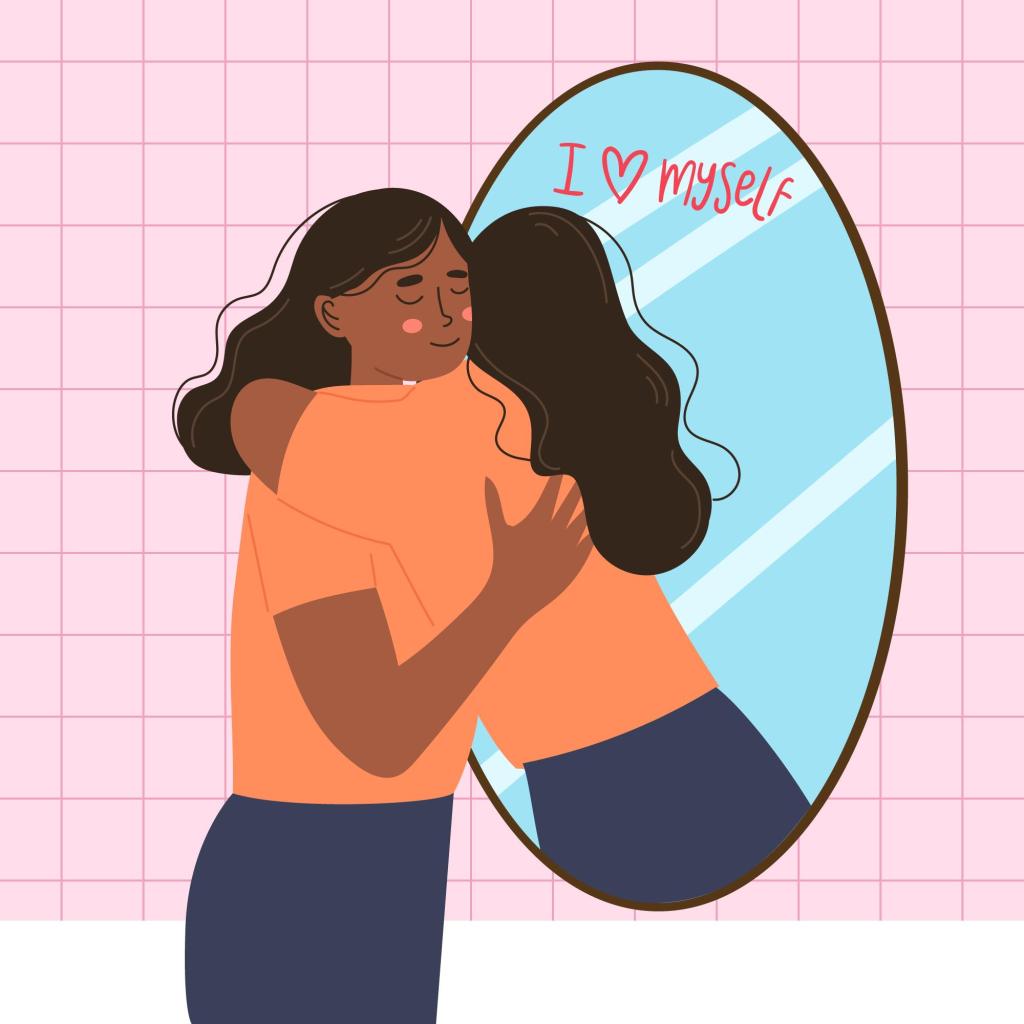
Actually, self-healing is about learning to love yourself. The article, What is Self-Love and Why Is It So Important? describes self-love as accepting yourself fully which means you treat yourself with kindness and respect, and nurture yourself. Self-love encompasses not only how you treat yourself but also addressing the thoughts and feelings you may have about yourself. Deprived of self-love, you’re likely to be self-critical and tend towards people-pleasing and perfectionism. You likely tolerate abuse or mistreatment from others when you’re without self-love. You likely neglect your own needs and feelings because you don’t value yourself. Often, those without self-love will self-sabotage or make decisions that are not in their best interest, or even deliberately self-harm. Self-love is the foundation that allows us to be assertive, set boundaries and create healthy relationships with others, practice self-care, pursue our interests and goals, and feel proud of who we are.
Dr. Rick Ingrasci says, “The placebo effect offers dramatic proof that all healing is essentially self-healing.” I would agree. Harvard Health Publishing (HHP), the consumer health information division of Harvard Medical School has an article titled, The power of the placebo effect. In the article it says:
“Your mind can be a powerful healing tool when given the chance. The idea that your brain can convince your body a fake treatment is the real thing — the so-called placebo effect — and thus stimulate healing has been around for millennia. Now science has found that under the right circumstances, a placebo can be just as effective as traditional treatments.”
In another HHP article, The real power of placebos, says:
“It was thought that the placebo effect only worked through deceitfulness — that is, you have to be tricked into thinking a treatment is real. But new research suggests that it may be possible to receive a placebo’s effects even if you know treatments are fake, a concept known as open-label placebos.”
For me, this is evidence of self-healing. Barbara Brennan, a spiritual healer, businesswoman and teacher working in the field of energy healing says, “The body is a self-healing organism, so it’s really about clearing things out of the way so the body can heal itself.” Therein lies the key to self-healing. You can’t just decide you’re going to heal, and it happens. You have to face your shadow self, the dark side of your nature. You have to resolve the trauma, change the limiting beliefs and address the unresolved emotions. Energy healing modalities like ThetaHealing, Pranic healing and sound healing assist in doing that. You need to find the modality that works best for you, but more about that in future blogs.
 The Healing Realm
Leave a comment